Virginia Car Loan Laws
Virginia lets dealers and buyers agree on the rate, requires processing fees to be posted rather than capped, and taxes the full price without a trade-in credit.
Updated By Lenditia Editorial Team 6-minute read No right to cure
In short
In Virginia, a dealer that extends installment credit may charge the rate you and the dealer agree on, so there is no state ceiling on a typical dealer contract. The processing fee, Virginia's name for the doc fee, has no cap but must be posted on a sign and listed on the buyer's order. The motor vehicle sales and use tax is 4.15% of the full price, with no deduction for a trade-in. Virginia gives no right to cure before repossession.
- Right to cure
- None in state law
- Rate ceiling
- No cap on dealer credit
- Doc fee limit
- No cap; must be posted
- Vehicle sales tax
- 4.15%, no trade-in credit
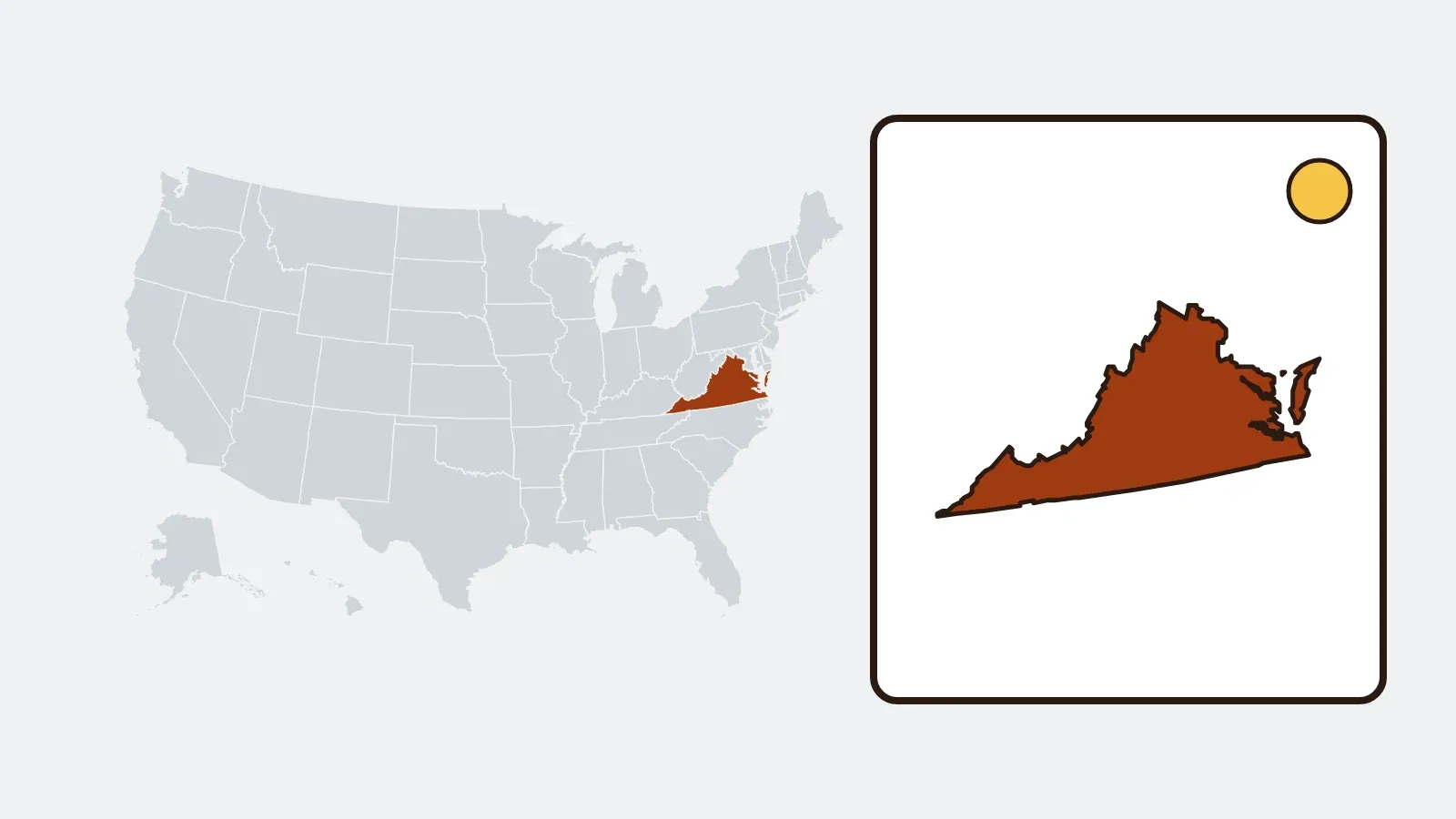
Virginia car-finance rules at a glance
- Right to cure
- None; repossession may follow any default
- Rate ceiling
- No cap on dealer installment credit; the rate is what you agree to
- Code §6.2-311. Banks, credit unions and consumer finance companies follow other sections of Title 6.2.
- Doc fee limit
- No cap; the processing fee must be posted and listed on the buyer's order
- Code §46.2-1530, last amended in 2025.
- After repossession
- Notice before sale; you may redeem; deficiency allowed
- Vehicle sales tax
- 4.15% of the gross price ($75 minimum); no trade-in deduction
- Regulator
- State Corporation Commission, Bureau of Financial Institutions
What a Virginia dealer contract can charge
When the dealer arranges your loan, the paperwork is a retail installment contract. Code of Virginia §6.2-311 lets a seller of goods that extends closed-end installment credit charge a finance charge "at such rate or rates as the seller and the purchaser have agreed." The statute sets no percentage limit.
The same section adds two limits. If you pay off early, the dealer must refund unearned finance charges using the Rule of 78 or a method at least as favorable to you. Late charges must follow §6.2-400. Banks, credit unions and finance companies work under other sections of Title 6.2, so a direct loan can come with different rules.
Processing fees and taxes in Virginia
- Processing fee. Virginia sets no dollar limit. A dealer that charges one must list it on the buyer's order and post the amount on a clear sign in the sales area, at least 8.5 by 11 inches with letters at least half an inch tall (§46.2-1530, last amended in 2025).
- Sales and use tax. The Department of Motor Vehicles collects 4.15% of the gross sales price when you title the car, or $75 if that is more.
- No trade-in credit. The tax applies to the full price. On a $40,000 car with a $5,000 trade-in, DMV taxes $40,000, not $35,000.
- Processing fee is taxed too. DMV counts the dealer processing fee as part of the gross sales price.
Because the trade-in does not reduce the tax, ask for the out-the-door figure in writing and check it with the out-the-door price calculator. Our guide to trade-ins and negative equity explains how a trade changes the loan.
Falling behind on a car loan in Virginia
Virginia law does not give car buyers a notice and a set number of days to catch up before repossession. Under Virginia's Uniform Commercial Code (§8.9A-609), a lender may take the car after default without a court order if it does so without a breach of the peace. Your contract defines default, so read the late-payment terms before you sign.
- Repossession. The agent may take the car from a street or driveway, but not by force, threats or over your objection on the spot.
- Notice before the sale. The lender must tell you how and when it will sell the car.
- Your chance to redeem. Until the sale, you can recover the car by paying the full balance plus the lender's costs.
- The deficiency. If the sale brings less than you owe, you can be sued for the rest; any surplus goes to you.
Our guides to repossession and the balance left after a sale explain how to respond at each step.
Where to check a lender and complain
Consumer finance companies need a license from the State Corporation Commission, whose Bureau of Financial Institutions supervises them. Dealers are licensed by the Motor Vehicle Dealer Board, which also approves the buyer's order form each dealer uses.
State Corporation Commission
Its Bureau of Financial Institutions licenses consumer finance companies and handles complaints about them.
Motor Vehicle Dealer Board
Licenses dealers and handles complaints about dealer conduct and paperwork.
Consumer Financial Protection Bureau
Takes complaints about any auto lender or servicer, including banks and finance companies.
Title loans follow separate Virginia rules; our sister site Lendmira covers them.
Questions people ask
Is there a maximum interest rate on a dealer car loan in Virginia?
No percentage cap applies to a typical dealer contract. Section 6.2-311 lets the seller and buyer agree on the rate, so compare APRs across offers.
How much can a Virginia dealer charge as a processing fee?
There is no cap. The dealer must post the amount on a sign in the sales area and list it on the buyer's order.
Does a trade-in lower the sales tax in Virginia?
No. The 4.15% sales and use tax applies to the gross sales price, with no deduction for a trade-in.
Do I get a warning before my car is repossessed in Virginia?
Not by law. The lender must send a notice before it sells the car. See what to do when you fall behind.
Sources
- Code of Virginia §6.2-311: Closed-end installment loans by sellers of goods or services
- Code of Virginia §46.2-1530: Buyer's order and processing fee disclosure
- Virginia DMV: Motor vehicle sales and use tax
- Code of Virginia §58.1-2401: Definitions for the motor vehicle sales and use tax
- Code of Virginia §8.9A-609: Secured party's right to take possession after default
- Code of Virginia §6.2-1501: Consumer finance license requirement
- FTC: Vehicle repossession
Facts on this page were checked against these sources on October 26, 2026.
Read next
-
Guide
Retail installment contract
The disclosure box, the Holder Rule notice, spot delivery and arbitration clauses, and a signing checklist.
-
Help
Repossession
When the lender can take the car, what an agent may not do, and how to get it back.
-

Guide
Out-the-door price
Every line from vehicle price to amount financed: doc fees, sales tax, add-ons and the trade-in.