Ohio Car Loan Laws
Ohio caps dealer financing at 25% APR, limits doc fees with a yearly-indexed ceiling, and lets you cure a default once after the car is taken.
Updated By Lenditia Editorial Team 6-minute read Right to cure
In short
Ohio's Retail Installment Sales Act lets a dealer and buyer agree on a rate up to 25% APR. A dealer's documentary fee may not exceed the lesser of an amount that started at $250 and rises with inflation each year, or 10% of the price. Sales tax starts at a 5.75% state rate, and only a new-car purchase gets credit for a trade-in. The lender may repossess without warning, but within five business days it must tell you how to cure, and you can reinstate the contract once. The Division of Financial Institutions handles consumer finance licensing and complaints.
- Right to cure
- Once, after repossession
- Rate ceiling
- 25% APR
- Doc fee limit
- Indexed cap or 10%
- Vehicle sales tax
- 5.75% state rate
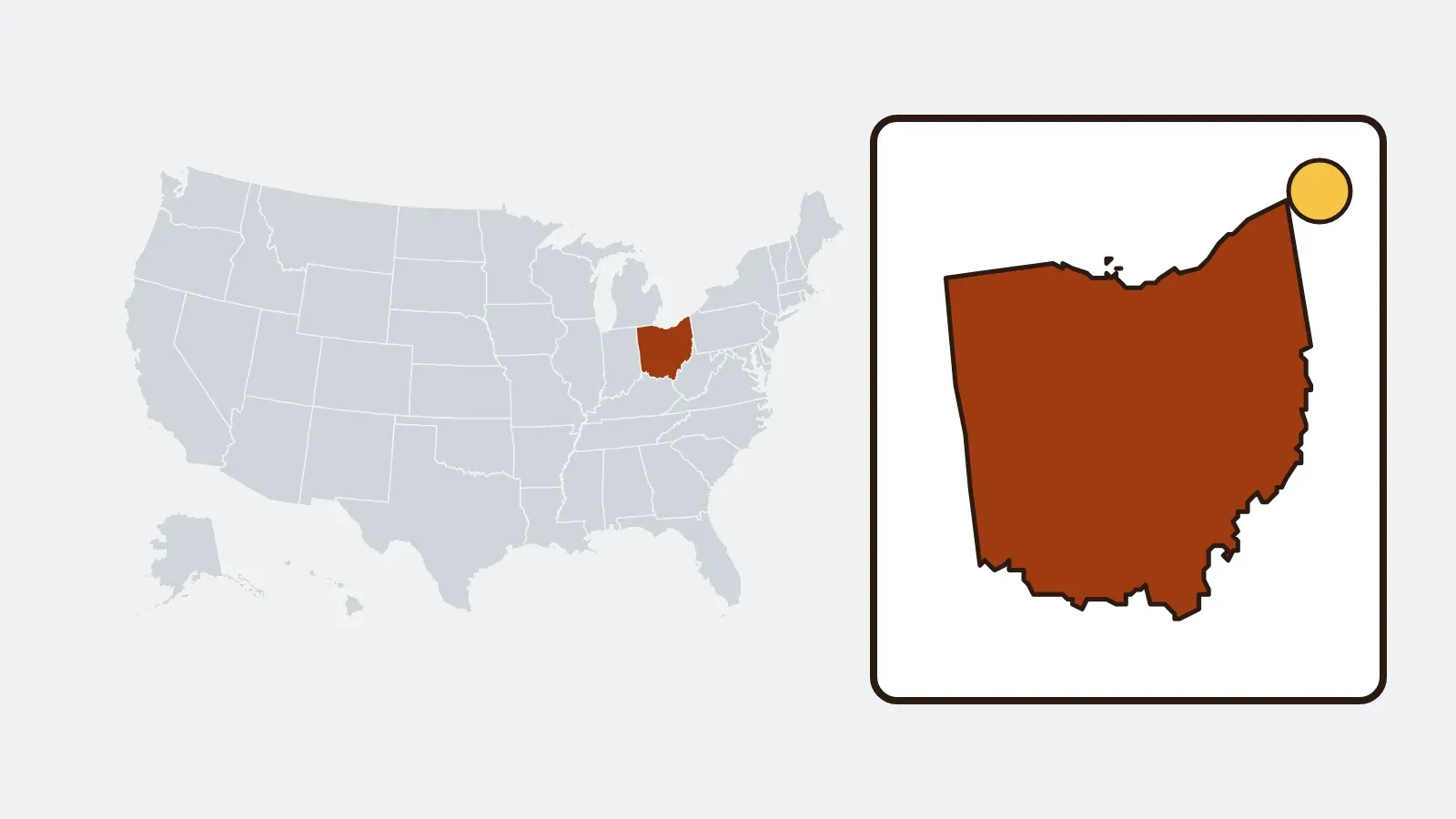
Ohio car-finance rules at a glance
- Right to cure
- Yes, once: 20 days after repossession or 15 days after notice
- ORC 1317.12 applies after the car is taken; no warning is required before it. Acceleration waits 30 days.
- Rate ceiling
- 25% APR on dealer retail installment contracts
- ORC 1317.061; banks, credit unions and direct lenders follow their own rules.
- Doc fee limit
- Lesser of 10% or a CPI-indexed amount that began at $250
- ORC 4517.261; the registrar adjusts the dollar cap each September and publishes it.
- After repossession
- Cure notice in 5 business days; 10 days' sale notice; deficiency allowed
- A lender that skips the cure notice loses its deficiency claim (ORC 1317.12).
- Vehicle sales tax
- 5.75% state plus county; trade-in credit on new vehicles only
- Regulator
- Ohio Division of Financial Institutions
How much interest an Ohio car contract can carry
When a dealer arranges your loan, you sign a retail installment contract under Chapter 1317 of the Ohio Revised Code. Section 1317.061 lets the seller charge any rate the parties agree to, up to an annual percentage rate of 25%. Section 1317.06 offers older alternative formulas, which matter mainly for very small contracts.
A ceiling is not a typical price. To see what the top rate means, $20,000 over 60 months at 25% APR is $587.03 a month, about $15,222 in interest. Most buyers with fair or good credit pay much less, so check your own figures with the car payment calculator.
- Late charge. Nothing may be charged on a payment less than 10 days late. After that, the charge is 5 cents per dollar, up to $3 per installment (ORC 1317.06).
- Acceleration. In a consumer contract, the seller may not demand the whole balance because of a missed payment until that default has lasted at least 30 days.
- Payment schedule. Payments must be substantially equal, or no installment may be more than 50% larger than any other, unless the contract lets you refinance on terms at least as good.
Doc fees and sales tax at an Ohio dealership
- Documentary fee. ORC 4517.261 caps it at the lesser of 10% of the contract amount (not counting tax, title and registration fees or negative equity) or a dollar limit that began at $250. The dollar limit is adjusted for inflation every September and never goes down.
- Fee in writing. The doc fee must be stated in writing, and the Department of Public Safety publishes the current dollar limit, so ask the dealer to show you the figure.
- Sales tax. The state rate is 5.75%. You pay at the clerk of courts title office, and the total rate depends on your county.
- Trade-in credit. A trade-in lowers the taxed price only when you buy a new vehicle from a new-car dealer. On a used car, you pay tax on the full price.
- Title fee. The general certificate of title fee rose from $15 to $18 on January 1, 2026.
What happens if you fall behind in Ohio
Ohio does not require a warning before repossession. Once you are in default, the lender may take the car without a court order as long as it does not breach the peace. What Ohio adds is a set of rules after the car is taken, in ORC 1317.12 and 1317.16.
- Notice within five business days. The lender must send a notice that explains the default and itemizes what you must pay to cure it.
- Your right to cure. You have until 20 days after the repossession or 15 days after the notice is sent, whichever is later. You pay the missed installments, unpaid late charges, reasonable retaking costs and a deposit of two installments, then you get the car back. You can use this right only once per debt.
- Notice of sale. The sale must be public. At least 10 days before it, the lender must send notice by certified mail with the time, place and minimum price, and publish a notice in a local newspaper.
- The deficiency. You may owe any shortfall after the sale. A lender that sells without sending the cure notice cannot recover its retaking costs or get a deficiency judgment.
If you receive a cure notice, act on it quickly. Our guides to falling behind on payments and the balance left after a sale explain the next steps.
Where to check a lender and complain
The Division of Financial Institutions in the Ohio Department of Commerce oversees consumer finance companies and state-chartered banks and credit unions, and takes complaints about them. Payday and title-loan rules are on Lendmira's Ohio page.
Division of Financial Institutions
Oversees consumer finance companies and state-chartered banks and credit unions; takes complaints online.
Ohio Attorney General
Its consumer protection staff take complaints about dealer sales practices.
Consumer Financial Protection Bureau
Takes complaints about any auto lender or servicer, including banks and finance companies.
Questions people ask
What is the maximum interest rate on a car loan in Ohio?
For a dealer-arranged retail installment contract, 25% APR under ORC 1317.061. Banks, credit unions and other lenders making direct loans follow their own rules.
How much can an Ohio dealer charge for a doc fee?
The lesser of 10% of the contract amount or an inflation-adjusted dollar limit that began at $250. The Department of Public Safety publishes the current limit each year.
Can I get my car back after it is repossessed in Ohio?
Yes, once. You can cure within 20 days after the repossession or 15 days after the lender's notice, whichever is later, by paying what is past due, the retaking costs and a two-installment deposit.
Does a trade-in lower the sales tax in Ohio?
Only when you buy a new vehicle from a new-car dealer. A used-car purchase is taxed on the full price.
Sources
- Ohio Revised Code 1317.061: Alternative finance charge, 25% APR
- Ohio Revised Code 1317.06: Finance and delinquency charges; acceleration (as amended September 30, 2025)
- Ohio Revised Code 1317.12: Notice after repossession and right to cure
- Ohio Revised Code 1317.16: Disposition of repossessed collateral
- Ohio Revised Code 4517.261: Documentary service charge (as amended October 24, 2024)
- Ohio Department of Taxation: Motor vehicles and sales tax
- Ohio Division of Financial Institutions
- WHIO: Several Ohio BMV fees increase in 2026 (news report)
Facts on this page were checked against these sources on October 26, 2026. The doc fee dollar limit changes every year, so confirm the current figure before you buy.
Read next
-
Help
Repossession
When the lender can take the car, what an agent may not do, and how to get it back.
-
Help
Behind on payments
What a missed payment costs, what to ask your lender for, and when repossession becomes a risk.
-
Guide
Retail installment contract
The disclosure box, the Holder Rule notice, spot delivery and arbitration clauses, and a signing checklist.