New Mexico Car Loan Laws
New Mexico leaves the rate on dealer financing to the contract, polices how dealers label fees, and lets a lender repossess without a warning period once you default.
Updated By Lenditia Editorial Team 5-minute read No right to cure
In short
New Mexico's Motor Vehicle Sales Finance Act requires a written contract with full disclosures but sets no maximum finance charge. Late charges are capped at 5% of the payment or $15, whichever is less. No law caps a dealer's documentary fee, but a dealer may not use that label for anything beyond paperwork the law requires. Instead of sales tax you pay a 4% motor vehicle excise tax on the price minus your trade-in. There is no right to cure. The Financial Institutions Division licenses finance companies.
- Right to cure
- None in state law
- Rate ceiling
- No state cap
- Doc fee limit
- No dollar cap
- Vehicle sales tax
- 4% excise tax
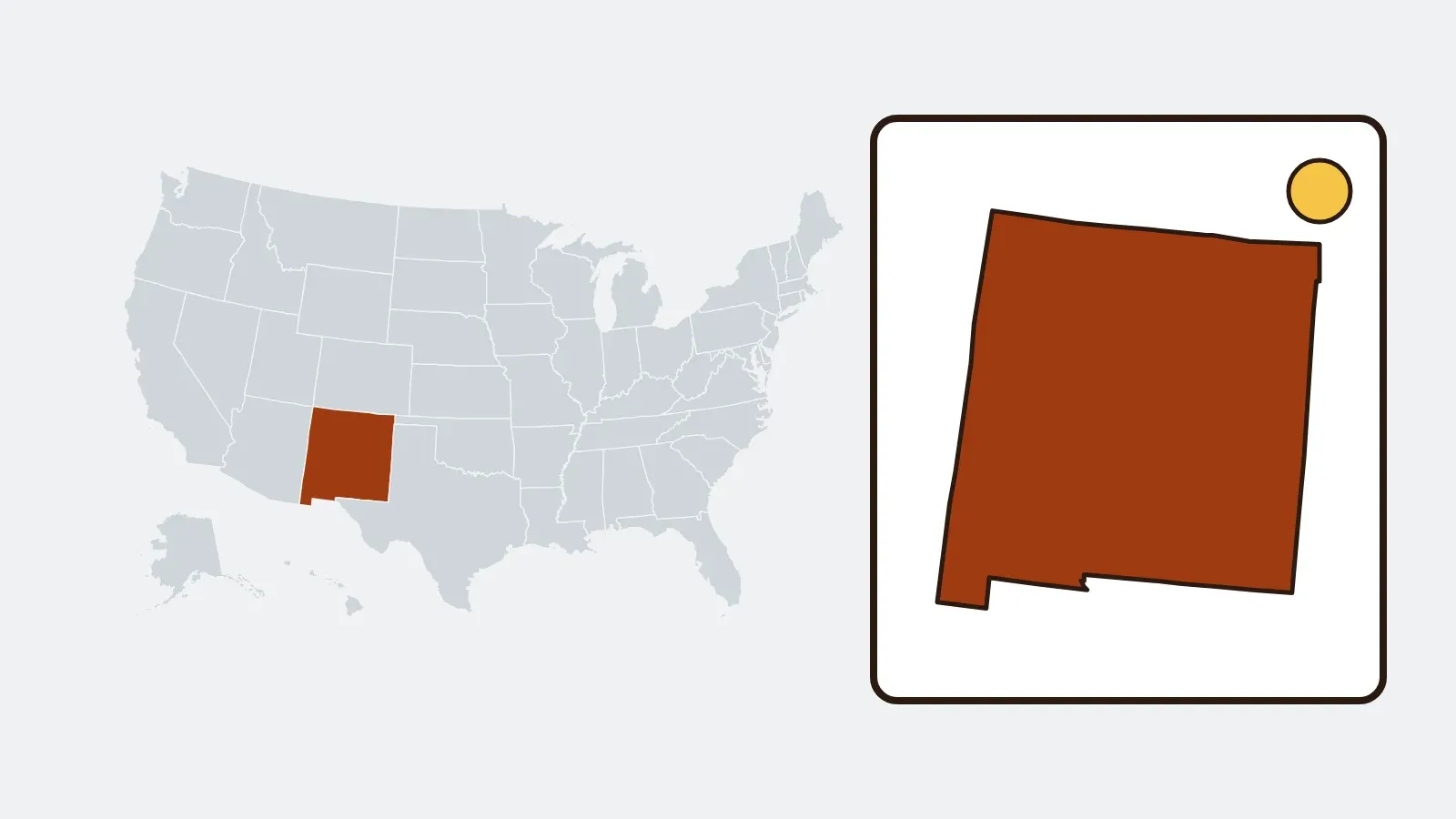
New Mexico car-finance rules at a glance
- Right to cure
- None; repossession may follow any default
- Rate ceiling
- No general cap on dealer contracts
- Motor Vehicle Sales Finance Act, NMSA §58-19-7; banks and credit unions follow their own rules.
- Doc fee limit
- No dollar cap; label limited to legally required paperwork
- 12.2.4.24 NMAC treats other charges called documentary fees as an unfair practice.
- After repossession
- Notice before sale; you may redeem; deficiency allowed
- Vehicle sales tax
- 4% excise tax on the price minus trade-in
- Regulator
- Financial Institutions Division, Regulation and Licensing Department
What a New Mexico car contract may charge
The Motor Vehicle Sales Finance Act, NMSA 1978 §58-19-1 and following, covers the retail installment contract you sign when a dealer arranges financing. Section 58-19-7 lists what the contract must show, including the amount of the finance charge, but it sets no rate ceiling. The APR is whatever you agree to, so a weak credit file can mean a high rate.
- Late charge. Only if the contract allows it, and only after a payment is at least 10 days late: 5% of the installment or $15, whichever is less.
- Collection costs. If the account goes to an outside attorney, fees of up to 15% of the amount due plus court costs may be added.
- Transfer of equity. If the holder agrees to let you transfer your equity to someone else, it may charge up to $25.
- A signed copy. Until the seller gives you a signed copy, you may cancel if you have not taken the car, and get your payments back.
Because the law does not cap the rate, shopping it is your protection. Get a quote from a bank or credit union first and see what the difference costs with the car payment calculator.
Dealer fees and the excise tax
- Documentary fee. No statute sets a dollar limit. A state consumer protection rule, 12.2.4.24 NMAC, makes it unfair to call a charge a documentary fee if it covers anything other than processing paperwork the law actually requires.
- Padding charges. The same rule bars items such as floor plan, handling, overhead or advertising charges when they are just extra dealer profit or not tied to a real product or service.
- Add-ons. A dealer may not add items like a service contract, credit life insurance or undercoating after the deal is agreed without your knowledge and consent.
- Excise tax. New Mexico charges a 4% motor vehicle excise tax on the price you pay. A trade-in allowance may be deducted from that price (NMSA §7-14-4).
What happens if you fall behind in New Mexico
New Mexico law does not give car buyers a notice and a set period to catch up before repossession. Once your contract treats you as in default, the lender may take the car without a court order under the Uniform Commercial Code, as long as the agent does not breach the peace.
- Repossession. The car may be taken without warning, but the agent may not breach the peace, for example with force or threats.
- Notice before the sale. The lender must send you a written notice before it sells the car.
- Redemption. Until the sale, you can get the car back by paying everything you owe plus the lender's reasonable costs.
- The deficiency. Section 58-19-7 says you remain liable for any shortfall as provided in the UCC (NMSA §55-9-608).
Our guides to repossession and the balance left after a sale explain how to check the lender's math.
Where to check a lender and complain
Companies that buy car contracts from dealers need a sales finance license from the Financial Institutions Division of the Regulation and Licensing Department. A dealer that keeps its own contracts falls under the act once it holds more than $100,000 of them. Small-loan and title-loan rules are on Lendmira's New Mexico page.
Financial Institutions Division
Licenses motor vehicle sales finance companies and repossessors, and takes complaints through the RLD.
New Mexico Attorney General
Takes complaints about unfair or deceptive dealer sales practices.
Consumer Financial Protection Bureau
Takes complaints about any auto lender or servicer, including banks and finance companies.
Questions people ask
Is there a maximum interest rate on a car loan in New Mexico?
Not for dealer-arranged contracts. The Motor Vehicle Sales Finance Act requires the finance charge to be disclosed but does not cap it.
How much can a New Mexico dealer charge for a doc fee?
No law sets a dollar amount, but a dealer may call a charge a documentary fee only if it covers paperwork the law requires. Ask for the fee in writing.
Do I pay sales tax on a car in New Mexico?
You pay a 4% motor vehicle excise tax instead, figured on the price minus any trade-in allowance.
Do I get a warning before my car is repossessed in New Mexico?
No. State law has no right-to-cure notice. The lender must notify you before it sells the car. See what to do when you fall behind.
Sources
- NMSA 1978 §58-19-7: Retail installment contracts; requirements; prohibitions (2025 edition, Justia)
- NMSA 1978 §58-19-2: Motor Vehicle Sales Finance Act definitions (2025 edition, Justia)
- NMSA 1978 §7-14-4: Motor vehicle excise tax rate and base (2025 edition, Justia)
- New Mexico Regulation and Licensing Department: Financial Institutions Division
- 12.2.4.24 NMAC: Contract additions without customer's knowledge (Justia Regulations)
Facts on this page were checked against these sources on October 26, 2026. The excise tax rate has been 4% since July 1, 2019.
Read next
-
Guide
Out-the-door price
Every line from vehicle price to amount financed: doc fees, sales tax, add-ons and the trade-in.
-
Help
Repossession
When the lender can take the car, what an agent may not do, and how to get it back.
-
Guide
Retail installment contract
The disclosure box, the Holder Rule notice, spot delivery and arbitration clauses, and a signing checklist.