New Jersey Car Loan Laws
New Jersey lets the dealer and buyer agree on a rate within the 30% usury limit, makes dealers itemize doc fees in writing, and gives no notice to catch up before repossession.
Updated By Lenditia Editorial Team 5-minute read No right to cure
In short
New Jersey's Retail Installment Sales Act lets the dealer and buyer agree on the finance charge, but the state Supreme Court has read the 30% criminal usury limit into that act. There is no dollar cap on a dealer's documentary fee; each service it covers must be itemized in writing. Sales tax is 6.625%, and a trade-in credit shown on the paperwork comes off the taxable price. The state gives no right to cure, so the lender may repossess after a default without warning. The Department of Banking and Insurance regulates the companies that finance car sales.
- Right to cure
- None in state law
- Rate ceiling
- 30% usury limit
- Doc fee limit
- No cap; itemized
- Vehicle sales tax
- 6.625%
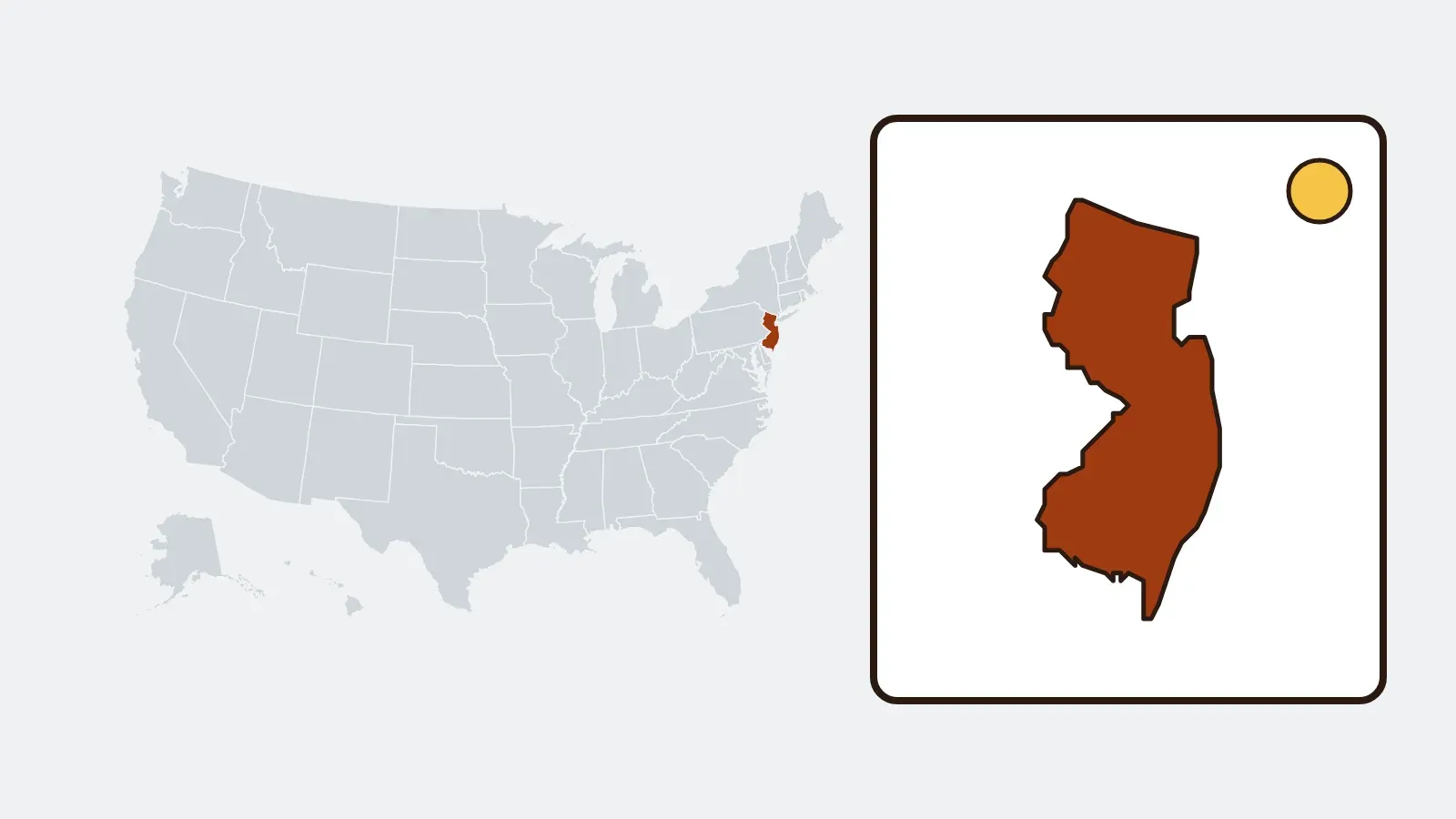
New Jersey car-finance rules at a glance
- Right to cure
- None; repossession may follow any default
- Rate ceiling
- Rate as agreed, within the 30% criminal usury cap
- N.J.S.A. 17:16C-41 sets no figure; Perez v. Rent-A-Center (2006), a rent-to-own case under the act, applied the 30% cap to it.
- Doc fee limit
- No dollar cap; each service itemized in writing
- N.J.A.C. 13:45A-26B.3; a fee tied to the financing is barred under N.J.S.A. 17:16C-50.
- After repossession
- Notice before sale; you may redeem; deficiency allowed
- Vehicle sales tax
- 6.625% of the price minus a separately stated trade-in
- Regulator
- New Jersey Department of Banking and Insurance
How much interest a New Jersey car contract can carry
When a dealer arranges your loan, you sign a retail installment contract governed by the Retail Installment Sales Act, N.J.S.A. 17:16C. Section 17:16C-41 lets the seller charge a time price differential in an amount the seller and buyer agree to. It names no percentage.
In Perez v. Rent-A-Center (March 15, 2006), a case about rent-to-own contracts that the court treated as retail installment sales, the New Jersey Supreme Court held that the act takes in the 30% yearly cap from the criminal usury statute, N.J.S.A. 2C:21-19. Applied to car contracts under the same act, that makes 30% the outer limit on a contract with an individual buyer. It is a ceiling, not a typical price: compare offers using the APR on the disclosure box.
- Variable rates. If a contract allows the rate to rise, it may not rise during the first three years, by more than 3 points in any 12 months, or by more than 6 points over the life of the contract.
- Early payoff. If you prepay within 12 months after the first payment is due, the penalty is capped: $100 at most on a contract over $5,000.
- Notice of increases. You must get written notice at least 90 days before the first rate increase and 30 days before any later one.
Dealer fees and tax on a New Jersey purchase
- Documentary fee. No dollar cap applies. Under N.J.A.C. 13:45A-26B.3 a dealer may charge only for services it actually performs, must itemize each one with its price in writing, and may not claim the state requires them.
- Doc fees and financing. The Department of Banking and Insurance has warned that a fee tied to the financing itself is barred by N.J.S.A. 17:16C-50, and suggests dealers charge the same fee on cash and credit deals.
- Sales tax. New Jersey taxes the sale at 6.625%. The tax applies to the doc fee too, since it is part of the sales price.
- Trade-in credit. The value of a trade-in comes off the taxable price only if it is stated separately on the invoice or bill of sale, so check that line.
What happens if you fall behind in New Jersey
New Jersey has no statute that gives car buyers a set period to catch up before repossession. Once your contract treats you as in default, the lender may take the car without a court order, provided it does not breach the peace (N.J.S.A. 12A:9-609). Your contract defines default, so read the late-payment terms.
- Repossession. The agent may tow the car without warning but may not breach the peace, for example by using force or threats.
- Notice before the sale. The lender must send a written notice before selling the car, saying when or after what date it will be sold.
- Redemption. Until the sale, you may get the car back by paying the full amount owed plus the lender's reasonable expenses.
- The deficiency. If the sale brings less than you owe, you can be sued for the rest. If it brings more, the surplus is yours.
Read our guides to repossession and the balance left after a sale before you talk to the lender.
Where to check a lender and complain
Dealers and finance companies that write or buy car contracts answer to the Department of Banking and Insurance. Dealer sales practices fall under the Consumer Fraud Act and the Division of Consumer Affairs. Payday and title-loan rules are on Lendmira's New Jersey page.
Department of Banking and Insurance
Licenses and examines consumer lenders and the companies that finance car sales; takes complaints about them.
Division of Consumer Affairs
Enforces the dealer advertising and sales rules, including doc fee itemization.
Consumer Financial Protection Bureau
Takes complaints about any auto lender or servicer, including banks and finance companies.
Questions people ask
What is the maximum interest rate on a car loan in New Jersey?
The Retail Installment Sales Act lets the parties agree on a rate, but the New Jersey Supreme Court has held that the 30% criminal usury cap applies, so 30% a year is the outer limit for an individual buyer.
Is there a limit on dealer doc fees in New Jersey?
There is no dollar cap. The dealer must itemize each service it actually performs, show its price in writing, and may not say the state requires it.
Do I get a warning before my car is repossessed in New Jersey?
Not by law. The lender can repossess after a default without advance notice, but it must notify you before it sells the car. See what to do when you fall behind.
Does a trade-in lower the sales tax in New Jersey?
Yes, if the trade-in credit is stated separately on the invoice or bill of sale. The 6.625% tax then applies to the price minus that credit.
Sources
- N.J.S.A. 17:16C-41: Time price differential on retail installment contracts (2025 edition, Justia)
- N.J.S.A. 2C:21-19: Criminal usury (2025 edition, Justia)
- Perez v. Rent-A-Center, Inc., New Jersey Supreme Court, March 15, 2006 (FindLaw)
- N.J.A.C. 13:45A-26B.3: Documentary service fees (Justia Regulations)
- Department of Banking and Insurance: Bulletin 04-23 on documentary fees in financed sales
- New Jersey Division of Taxation: Sales and use tax rate
- N.J.S.A. 54:32B-2: Sales tax definitions, trade-in credit (2025 edition, Justia)
- N.J.S.A. 12A:9-609: Secured party's right to take possession after default (Justia)
Facts on this page were checked against these sources on October 26, 2026. The 6.625% sales tax rate has applied since January 1, 2018.
Read next
-
Guide
Retail installment contract
The disclosure box, the Holder Rule notice, spot delivery and arbitration clauses, and a signing checklist.
-
Help
Repossession
When the lender can take the car, what an agent may not do, and how to get it back.
-
Guide
Out-the-door price
Every line from vehicle price to amount financed: doc fees, sales tax, add-ons and the trade-in.