Maryland Car Loan Laws
Maryland caps dealer finance rates, fixes the dealer processing charge at $800, and gives you 15 days after a repossession to get the car back.
Updated By Lenditia Editorial Team 6-minute read Right to cure
In short
Maryland caps dealer contracts at 24% simple interest on new and recent used cars, and older used cars sold under the retail installment sales law may carry up to 27%. The dealer processing charge may not exceed $800 and must be labeled "not required by law." Maryland gives no warning period before repossession, but afterward the lender must hold the car for 15 days, during which you can usually get it back by paying only the past-due amount plus costs and then resume your payments. The state charges a 6.5% excise titling tax. The Office of Financial Regulation licenses sales finance companies.
- Right to cure
- Yes: 15 days after repo
- Rate ceiling
- 24% to 27% a year
- Doc fee limit
- $800
- Vehicle sales tax
- 6.5% titling tax
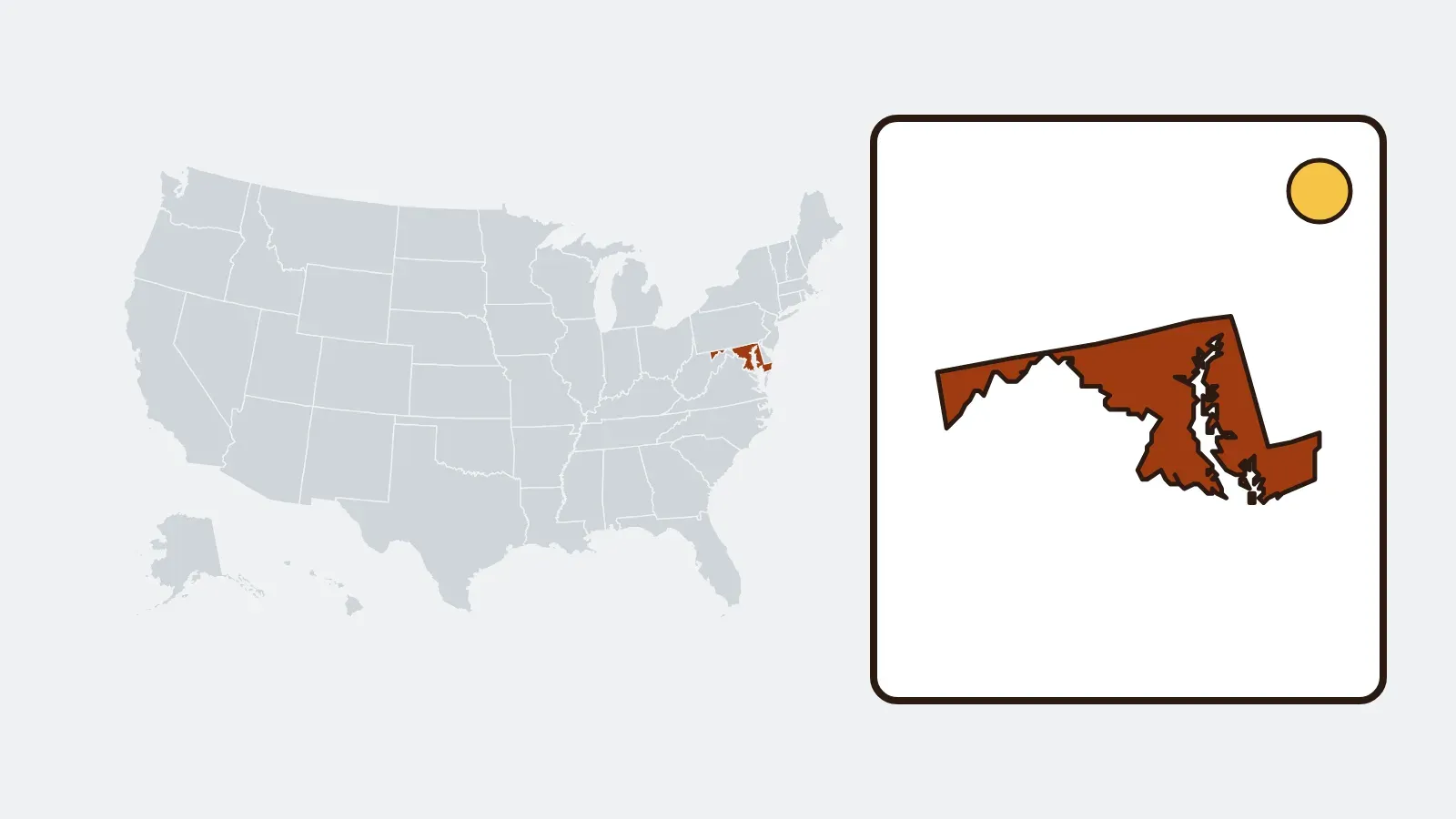
Maryland car-finance rules at a glance
- Right to cure
- Yes, after repossession: 15 days to pay the past-due amount and resume the loan
- Commercial Law §12-1021 (Closed End Credit contracts): no warning before repossession; full balance if repossessed in the prior 18 months.
- Rate ceiling
- 24% on new and recent used cars; 27% on older used cars
- Commercial Law §12-609; contracts under the Closed End Credit provisions are capped at 24% (§12-1003).
- Doc fee limit
- $800 since July 1, 2024; labeled not required by law (not indexed)
- After repossession
- Notice within 5 days; 15 days to redeem; sale notice; no deficiency if notices skipped
- Vehicle sales tax
- 6.5% excise titling tax on the price minus trade-in; $100 minimum
- Regulator
- Office of Financial Regulation (Maryland Department of Labor)
How much interest a Maryland car contract can carry
A Maryland retail installment contract can be written under one of two laws in the Commercial Law Article. The Retail Installment Sales Act sets ceilings by vehicle class in §12-609. A creditor may instead elect, in writing, the Credit Grantor Closed End Credit provisions, which cap the rate at 24% simple interest (§12-1003). A contract that uses those provisions must say so in writing.
| Vehicle | Ceiling (simple interest) |
|---|---|
| New vehicle | 24% |
| Used, 2024 to 2026 models | 24% |
| Used, 2023 model year or older | 27% |
| Contract under Closed End Credit provisions | 24% |
Under the retail installment law, a dealer may not add charges the section does not allow, and a holder that collects more than the law permits forfeits the finance charge unless it fixes an honest error within 60 days. A ceiling is not a typical rate: test any offer in the car payment calculator.
Fees and taxes on a Maryland purchase
- Dealer processing charge. The cap rose from $500 to $800 on July 1, 2024 (Transportation §15-311.1). It covers paperwork, title, tags and records, and must be reasonable.
- How it must appear. The contract must show it in 12-point type as a dealer processing charge not required by law. Ads must include it in the price or disclose it next to the price, and on request the dealer must list the services it covers.
- Excise titling tax. Maryland charges 6.5% of the vehicle's value instead of sales tax, with a $100 minimum. For a dealer sale, the base is the price the dealer certifies.
- Trade-in. The trade-in allowance is subtracted from the purchase price before the 6.5% is applied.
- Repair contracts and debt cancellation. Under the retail installment law, these may be financed only if itemized, and a seller may not require a repair contract to approve your financing.
What happens if you fall behind in Maryland
Maryland does not require a cure notice before a lender repossesses, but it does give you a right to catch up afterward, which is why we count it as a right-to-cure state. The lender may send a notice at least 10 days ahead, and doing so lets it recover its repossession and storage costs if you redeem. The rules below come from §12-1021 for Closed End Credit contracts; §12-624 sets similar notice rules for retail installment contracts.
- Repossession. The car may be taken by court process or by self-help without force.
- Notice within 5 days. After taking the car, the lender must tell you in writing, by hand or by registered or certified mail, how to redeem it, the amount due, where the car is stored and your rights on resale.
- Fifteen days to redeem. The lender must keep the car for 15 days after that notice. You can redeem it by paying the past-due amount, not the accelerated balance, and resume the contract. If you were repossessed within the previous 18 months, the lender may demand the full balance.
- Notice of sale. At least 10 days before the sale, the lender must send the time and place by certified mail.
- Deficiency. A lender that skips the required notices loses its right to a deficiency judgment, and the sale must be commercially reasonable.
Keep every letter and envelope. Our guides on repossession and deficiency balances explain how to use these deadlines.
Where to check a lender and complain
The Office of Financial Regulation, part of the Maryland Department of Labor, licenses sales finance companies that buy installment contracts from dealers. Dealers themselves need no credit license and are regulated by the Motor Vehicle Administration.
Office of Financial Regulation
Licenses sales finance companies through NMLS and can disallow a deficiency after a sale that was not commercially reasonable.
Motor Vehicle Administration
Regulates the dealers who sell the car and write the installment contract.
Consumer Financial Protection Bureau
Takes complaints about any auto lender or servicer, including banks and finance companies.
Questions people ask
What is the maximum interest rate on a car loan in Maryland?
For dealer contracts, 24% simple interest on new cars and used cars up to two model years old, and up to 27% on older used cars under the retail installment sales law. Contracts under the Closed End Credit provisions are capped at 24%.
How much can a Maryland dealer charge in processing fees?
No more than $800 since July 1, 2024. The contract must label it as a dealer processing charge that is not required by law.
Can I get my car back after repossession in Maryland?
Usually, yes. Under a Closed End Credit contract you have 15 days after the lender's notice to pay the past-due amount and costs and resume the loan, unless you were repossessed in the previous 18 months.
Does a trade-in lower the titling tax in Maryland?
Yes. The 6.5% excise tax applies to the purchase price minus the trade-in allowance.
Sources
- Maryland Commercial Law §12-609: Finance charge limits on retail installment sales
- Maryland Commercial Law §12-1003: Interest rate under Closed End Credit provisions
- Maryland Commercial Law §12-1021: Repossession, redemption and sale
- Maryland Transportation §15-311.1: Dealer processing charge
- Maryland Transportation §13-809: Vehicle excise tax
- Maryland Office of Financial Regulation: Sales finance companies
Facts on this page were checked against these sources on October 26, 2026. The $800 processing charge cap has applied since July 1, 2024.
Read next
-
Help
Repossession
When the lender can take the car, what an agent may not do, and how to get it back.
-
Guide
Out-the-door price
Every line from vehicle price to amount financed: doc fees, sales tax, add-ons and the trade-in.
-
Help
Deficiency balance
How lenders compute what you owe after a repossession sale, and how to check or dispute it.