Idaho Car Loan Laws
Idaho lets you and the creditor agree on the rate, limits what can count as a default, and lets a lender repossess without a warning period.
Updated By Lenditia Editorial Team 5-minute read No right to cure
In short
The Idaho Credit Code sets no maximum rate on car financing: the finance charge is whatever the parties agree to. It does limit default to a missed payment or a serious threat to repayment that the creditor must prove. There is no right to cure, so a lender may repossess after a default without a warning period. Idaho charges 6% sales tax, and a trade-in at a dealer reduces the taxable price. On credit sales with a cash price of $1,000 or less, the seller cannot collect a deficiency after repossession. The Department of Finance oversees consumer lenders.
- Right to cure
- None in state law
- Rate ceiling
- None; agreed rate
- Doc fee limit
- No cap found
- Vehicle sales tax
- 6% after trade-in
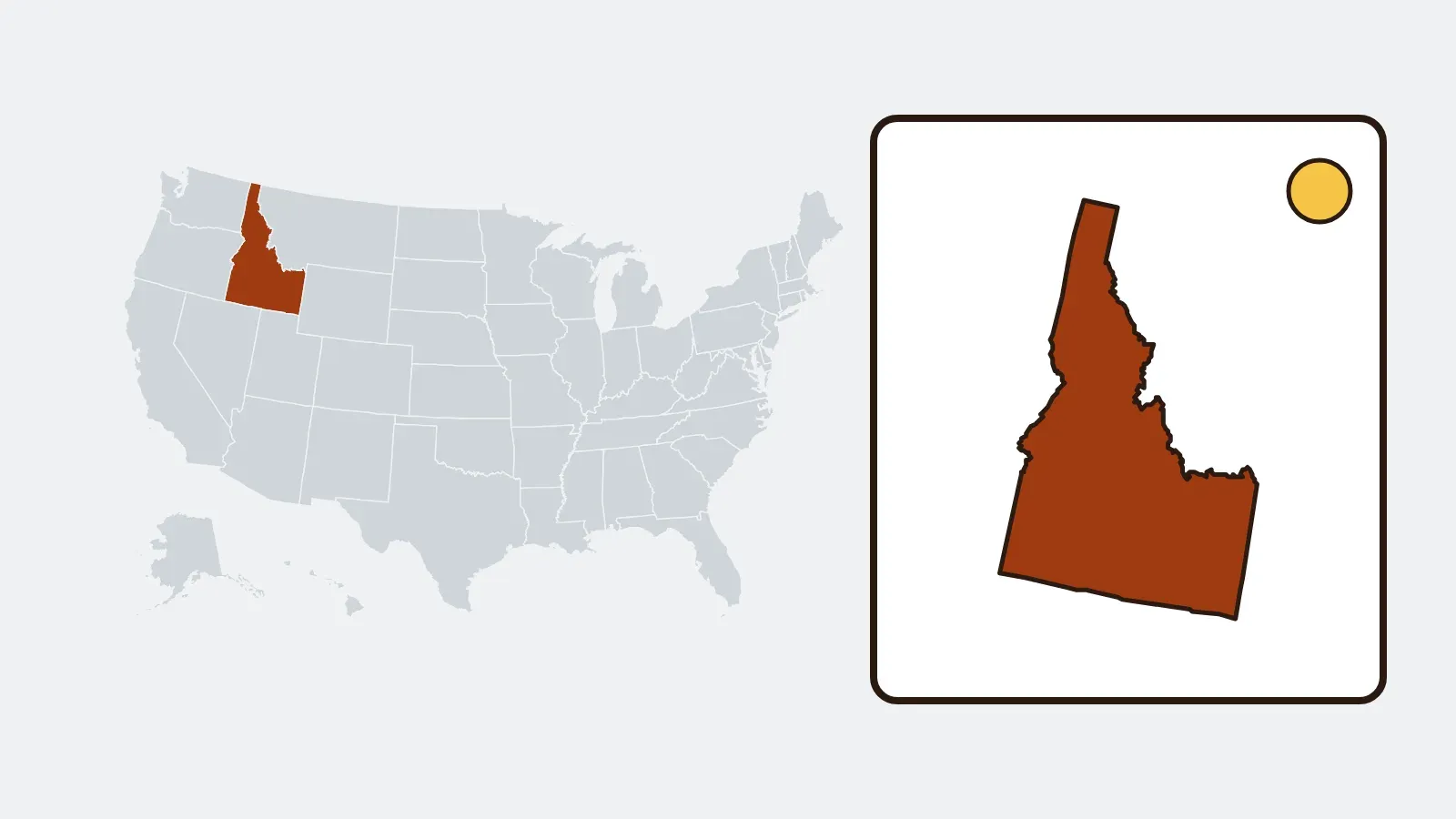
Idaho car-finance rules at a glance
- Right to cure
- None; default is limited to a missed payment or proven serious risk
- Idaho Code §28-45-107 restricts what counts as default but sets no notice or cure period.
- Rate ceiling
- No cap; the agreed rate applies (Idaho Code §28-42-201)
- Banks and credit unions follow their own charter rules.
- Doc fee limit
- No cap found in state law; the fee is taxable
- After repossession
- Notice before sale; you may redeem; no deficiency if cash price was $1,000 or less
- Vehicle sales tax
- 6% of price minus dealer trade-in; some cities add tax
- Regulator
- Idaho Department of Finance (Consumer Finance Bureau)
What an Idaho car contract may charge
Idaho regulates car financing through the Idaho Credit Code in Title 28 of the Idaho Code. It applies both to a retail installment contract signed at a dealer and to a direct loan. Section 28-42-201 says the rate of finance charge is the one agreed between the parties. There is no ceiling based on the age of the car or the size of the loan. The same section lets a creditor collect other charges too, except where the Code itself bans or limits them, so read every line of the itemization and ask what each charge pays for. Optional products such as GAP coverage and service contracts can be declined.
With no cap, the rate on your contract depends on your credit and on whether you compare offers. A preapproval from a bank or credit union gives you a figure to test the dealer's offer against. Our guide to the APR on a car loan explains what to compare, and the car payment calculator shows the dollar effect of each rate.
Fees and sales tax in Idaho
- Sales tax. Idaho's sales tax is 6% of the sales price (Idaho Code §63-3619). Some cities add their own sales tax.
- Trade-in. When you buy from a dealer, the amount allowed for your trade-in comes off the price before tax. The paperwork must be done at the time of the sale. Private-party sales get no trade-in allowance.
- Document fees. The Tax Commission counts a dealer's document fee as part of the taxable sales price. We found no cap on the amount in Idaho law, so ask for it in writing early.
- Prep work. Painting, lettering or repairs the seller does before the sale are part of the taxable price even when listed separately.
Falling behind and repossession in Idaho
Idaho's Credit Code allows a contract to treat you as in default in only two cases: you miss a payment as required, or the prospect of payment or of collecting on the collateral is significantly impaired, which the creditor has to prove (§28-45-107). The Code does not require a notice and a cure period before the lender acts. After a default, Idaho's version of Article 9 of the Uniform Commercial Code applies.
- Repossession. The lender may take the car without a court order, provided there is no breach of the peace (§28-9-609).
- Notice before sale. The lender must send you a notice before it disposes of the car (§28-9-611 to §28-9-614).
- Redemption. You can redeem the car before the sale by paying what the contract secures plus reasonable expenses (§28-9-623).
- Deficiency. You may owe the shortfall after the sale (§28-9-615). In a consumer credit sale where the cash price was $1,000 or less, the seller cannot hold you personally liable for it (§28-45-103).
Read our guides to repossession and the deficiency balance for what to do at each step.
Where to check a lender and complain
The Idaho Department of Finance oversees state banks and credit unions through one bureau and consumer credit, including consumer lenders, through its Consumer Finance Bureau. Its website has a complaint guide. National banks and federal credit unions answer to federal regulators.
Idaho Department of Finance
Its Consumer Finance Bureau oversees consumer credit and takes complaints about lenders.
Idaho Attorney General
Handles complaints about deceptive sales practices, including at dealerships.
Consumer Financial Protection Bureau
Accepts complaints about any auto lender or servicer nationwide.
Questions people ask
Is there a maximum interest rate on car loans in Idaho?
No. Under the Idaho Credit Code, the finance charge is the rate the parties agree to, so compare APRs before you sign.
Does a trade-in reduce sales tax in Idaho?
Yes, when you buy from a dealer. The trade-in allowance reduces the price that the 6% tax applies to. Private sales get no trade-in credit.
Can I owe money after a repossession in Idaho?
Usually yes, but not in a consumer credit sale where the cash price was $1,000 or less. See deficiency balances.
Do I get a warning before my car is repossessed in Idaho?
State law does not require one. The lender must send a notice before it sells the car, and you can redeem the car until then.
Sources
- Idaho Code (2025), §28-42-201: Finance charges agreed by the parties
- Idaho Code (2025), §28-45-107: Default
- Idaho Code (2025), §28-45-103: Restrictions on deficiency judgments
- Idaho State Tax Commission: Motor vehicle dealers, sales price
- Idaho Code §63-3619: Sales tax rate
- Idaho Department of Finance
Facts on this page were checked against these sources on October 26, 2026.
Read next
-
Help
Repossession
When the lender can take the car, what an agent may not do, and how to get it back.
-
Help
Deficiency balance
How lenders compute what you owe after a repossession sale, and how to check or dispute it.
-
Guide
Understand APR
APR vs interest rate, the finance charge on your contract, and how a dealer markup raises the APR.