Hawaii Car Loan Laws
Hawaii caps credit sale charges at 24% a year, voids a car deal that depended on financing you could not get, and gives no warning period before repossession.
Updated By Lenditia Editorial Team 5-minute read No right to cure
In short
Hawaii's credit sales law, HRS chapter 476, limits the finance charge on a dealer-arranged contract to 24% a year. The chapter covers contracts with a principal balance up to $25,000, and larger ones when the seller brings them under it. Hawaii has no sales tax: the dealer owes a 4% general excise tax plus a 0.5% county surcharge and may pass up to 4.712% on to you. A purchase that depended on financing is void if you do not qualify for it. State law gives no right to cure before repossession.
- Right to cure
- None in state law
- Rate ceiling
- 24% a year
- Doc fee limit
- No cap found
- Vehicle sales tax
- None; 4.5% GET
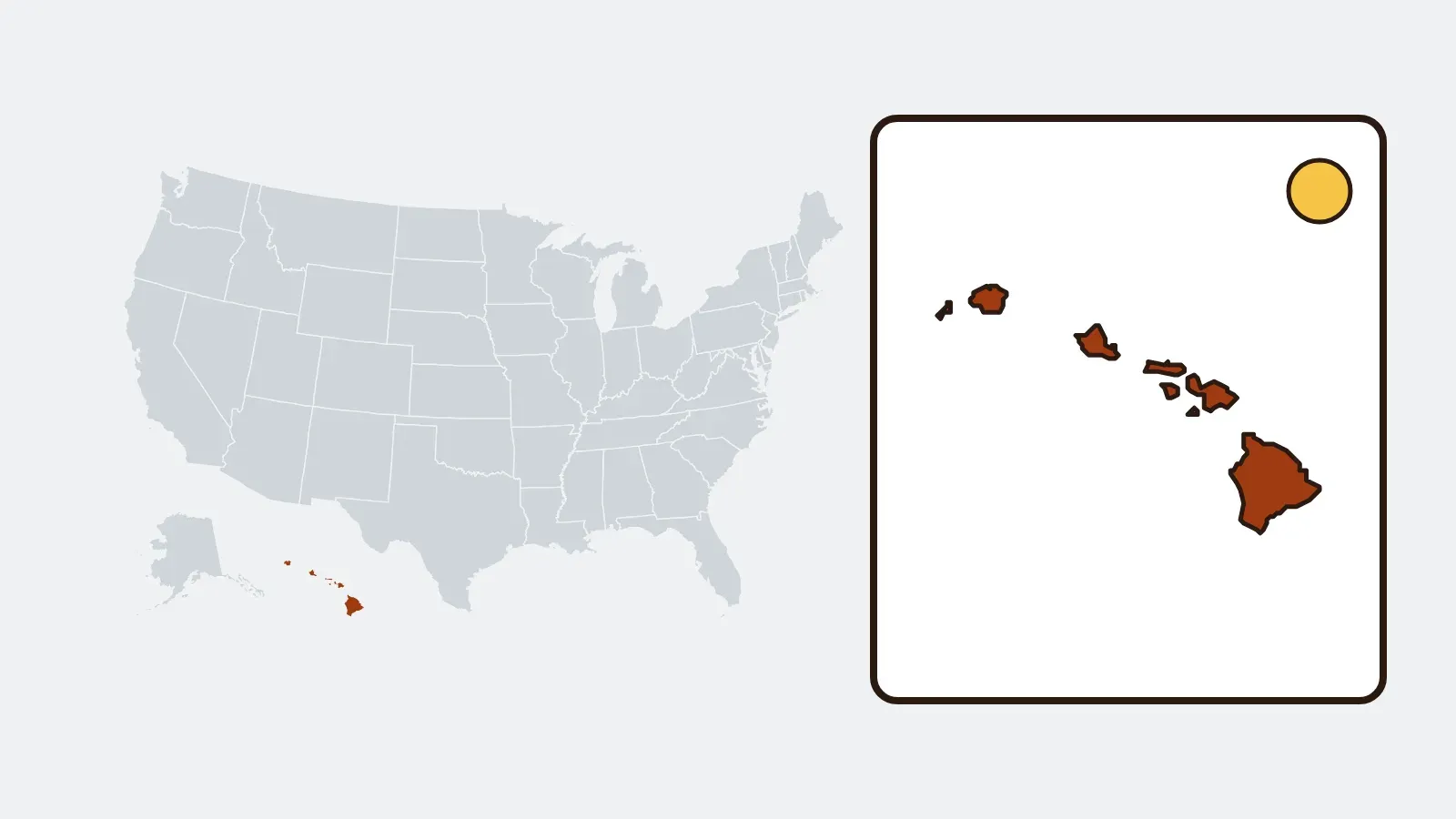
Hawaii car-finance rules at a glance
- Right to cure
- None; repossession may follow a default without notice
- Rate ceiling
- 24% a year on credit sales under HRS ch. 476
- Ch. 476 covers contracts up to $25,000 or larger ones the seller opts in; banks and credit unions follow their own rules.
- Doc fee limit
- No cap found in state law
- After repossession
- Notice before sale; you may redeem; deficiency allowed
- Vehicle sales tax
- None; 4% GET plus 0.5% county surcharge, pass-on up to 4.712%
- Regulator
- Division of Financial Institutions (DCCA); dealers: Motor Vehicle Industry Licensing Board
How much a Hawaii car contract may charge
When a dealer finances your car, the retail installment contract is a credit sale contract under HRS chapter 476. Section 476-28 lets the seller charge a finance charge of no more than 24% a year on the unpaid balance, whether the rate is fixed or variable.
- The $25,000 line. Chapter 476 does not cover a credit sale with a principal balance over $25,000 unless the seller elects to bring it under the chapter. A contract that follows the chapter's form rules is presumed to have made that choice (§476-1).
- Usury law. Contracts under chapter 476 are excluded from the general interest limits in chapter 478, so the 24% ceiling is the one that applies to them (§478-4).
- Banks and credit unions. A direct loan from a bank or credit union follows the rules for that institution, not the credit sales chapter.
A ceiling is not a typical price. Compare the APR on the dealer's contract with an offer from your own bank or credit union, and check the dollar cost with the car payment calculator.
Fees, excise tax and the financing contingency
- General excise tax. Hawaii taxes the dealer's gross income at 4%. Every county adds a 0.5% surcharge, in effect through December 31, 2030. A dealer may pass the tax on to you at up to 4.712% of the price, so ask whether the quote includes it.
- Dealer documentation fee. We found no cap on it in Hawaii's motor vehicle dealer or credit sales laws. Ask for the amount in writing before you settle on a price.
- Financing contingency. If your purchase or lease was contingent on financing and you cannot qualify under the credit application you signed at the dealership, the agreement is void, even if you already drove the car home (§437-31.5).
Falling behind and repossession in Hawaii
Hawaii has no statute that requires a lender to send a notice of default and wait before it takes the car. Chapter 476 does bar a contract term that lets the holder speed up the payments arbitrarily when you are not in default (§476-14). Once you are in default under the contract, Article 9 of the Uniform Commercial Code, found in HRS chapter 490, sets the rules.
- Repossession. The lender may take the car without going to court if it does so without a breach of the peace.
- Notice before sale. The lender must send you a notice of the planned sale, and for consumers it must say whether you may owe a deficiency.
- Redemption. Until the car is sold, you can redeem it by paying the full secured debt plus the lender's reasonable expenses.
- Deficiency. If the sale price falls short of the balance, you can owe the difference, and you can ask for a written explanation of the figure.
Our guides to falling behind on payments and to repossession cover the choices at each step.
Where to check a lender and complain
Hawaii does not have a separate sales finance license. Dealers hold licenses from the Motor Vehicle Industry Licensing Board, and the Division of Financial Institutions oversees state banks and licensed lenders. The Attorney General, the Office of Consumer Protection and county prosecutors can enforce chapter 476 (§476-31).
Division of Financial Institutions
Oversees state-chartered banks and licensed lenders, including installment lenders. DCCA line: 1-844-808-3222.
Office of Consumer Protection
Its director, like the Attorney General, can bring cases under the credit sales law.
Consumer Financial Protection Bureau
Accepts complaints about any auto lender or servicer nationwide.
Questions people ask
What is the maximum interest rate on a car loan in Hawaii?
For a dealer-arranged credit sale under HRS chapter 476, the finance charge may not exceed 24% a year. The chapter covers contracts up to $25,000 and larger ones the seller brings under it.
Do I pay sales tax on a car in Hawaii?
Hawaii has no sales tax. The dealer owes general excise tax of 4% plus a 0.5% county surcharge and may pass up to 4.712% on to you.
What if my financing falls through after I take the car?
If the deal was contingent on financing and you do not qualify under the application you signed, Hawaii law makes the agreement void. See yo-yo financing.
Do I get a warning before my car is repossessed in Hawaii?
No state law requires one. The lender must send a notice before it sells the car, and you can redeem the car until the sale.
Sources
- Hawaii Revised Statutes (2025), §476-28: Regulation of finance charges
- Hawaii Revised Statutes (2025), §476-1: Credit sales definitions
- Hawaii Revised Statutes (2025), §437-31.5: Motor vehicle sales and lease contracts
- Hawaii Department of Taxation: County surcharge on general excise tax
- Hawaii Division of Financial Institutions
Facts on this page were checked against these sources on October 26, 2026. The county surcharges are scheduled to end on December 31, 2030.
Read next
-
Guide
Retail installment contract
The disclosure box, the Holder Rule notice, spot delivery and arbitration clauses, and a signing checklist.
-
Help
Yo-yo financing
The dealer says your financing fell through after you drove away. What to check and what to refuse.
-
Help
Repossession
When the lender can take the car, what an agent may not do, and how to get it back.